[ad_1]
Baxi has printed its 2024 Installer Expertise Survey, revealing that attitudes of heating engineers in direction of low carbon heating are laborious to shift, contributing to the gradual development in UK warmth pump adoption.
Over 300 installers took half within the survey, performed in August 2024 in partnership with inexperienced provide chain consultancy Gemserv. It reveals that simply 9% of installers are becoming warmth pumps. That is up from 3% in 2022 and seven% in 2023.
Sentiment in direction of warmth pump set up sooner or later seems weak, with half of installers saying they’re “considerably” or “extraordinarily unlikely” to begin becoming warmth pumps within the subsequent three years. This compares to 46% in 2022 and even much less confidence – 53% – in 2023. There’s extra enthusiasm for hybrid programs – the place a warmth pump is mixed with a gasoline boiler – with 30% of installers displaying curiosity.
Authorities schemes, such because the Boiler Improve Scheme (BUS), are met with frustration within the survey, as a result of perceived complexity, extreme paperwork and lack of client consciousness. Solely 9% of installers fee authorities schemes as ‘’good’’ or ‘’glorious’’ and 42% say prospects by no means point out the BUS.
A insecurity to advertise and set up low-carbon heating applied sciences has been a characteristic of the Installer Expertise Survey because it started in 2022. This yr, there’s a slight enchancment, with 11% of installers saying they’re ‘extraordinarily assured’ in discussing low-carbon applied sciences (up from 7% in 2023) and 35% ‘reasonably assured’. This seems to point that whereas coaching alternatives and business communication are having a constructive impact, many installers nonetheless lack the experience to totally promote and set up low-carbon heating applied sciences.
Sensible coaching is vital to constructing confidence, with 34% of respondents indicating a choice for hands-on studying. The perceived excessive value of coaching, together with the complexities of MCS accreditation, are an ongoing impediment to studying.
A recurring theme in all three surveys has been a generational divide amongst installers, with these nearing retirement much less inclined to spend money on coaching.
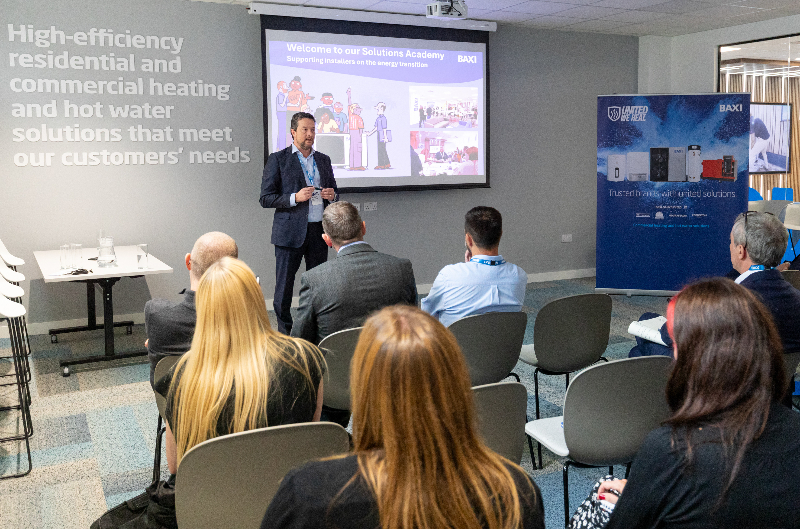
Baxi shared the findings of the survey at an occasion held on the Baxi Options Academy in Warwick on twenty fourth September.
Ian Trott, Baxi’s Head of UK Coaching mentioned, “Whereas the 2024 survey reveals some constructive developments, significantly relating to hybrid programs, most of the challenges highlighted by earlier surveys, reminiscent of inadequate coaching, poor authorities help, low client demand, haven’t moved on. The transition to low-carbon heating would require extra focused interventions to help installers in overcoming these limitations.”
James Higgins, Companion, Low Carbon at Gemserv, mentioned: “The 2024 installer survey reveals incremental progress in attitudes in direction of low-carbon heating applied sciences amongst installers, however because the business strikes ahead, elevated monetary help, streamlined coaching alternatives, and efforts to boost client consciousness will probably be essential to reaching warmth decarbonisation.’’
[ad_2]